


Printing Luggage
Your Premier Dongguan Xinhui Luggage Factory Manufacturer
Dongguan Xinhui Luggage Factory is a leading case & luggage manufacturer in China, specialized in the research, manufacture, and sale of a wide variety of cases & luggage, including PC/ABS trolley case, spinner luggage, custom trolley case, aluminum luggage, flight case, and more for 20 years.
Besides, we have 3 factories, two are luggage accessory factories, so we have advantages of delivery time and good quality in competitive price!
Xinhui Luggage wishes to create brilliance with you with hearty and wide mind richly and proudly!
We aim to create best value for our customers and to be your best choice of bags supplier. We sincerely hope to develop and continue cooperative relationships based on mutual benefit with friends all over the world.
-
Gradient Color Trolley Luggage Bag
Export gradient color luggage case 20' 24' 28' set suit cases travel trolley luggage. PC shell
-
Suit Cases Trolley Luggage Bag
Export gradient color luggage case 20' 24' 28' set suit cases travel trolley luggage. PC shell
-
Manufacture PC Trolley Luggage Bag
Hot sale suitcase manufacture PC customize printing travel case 20' 24' 28' set suit cases travel
-
Travel Trolley Luggage Bag
High Quality PC Travel Trolley Printing Pattern 20 Inches Suitcase Carry On Luggage Hard Shell
-
Lightweight Printing Swivel Suitcase
This Lightweight printing swivel suitcase has a radial surface texture. It uses a plastic handle,
-
Cardan Printing Boarding Suitcase
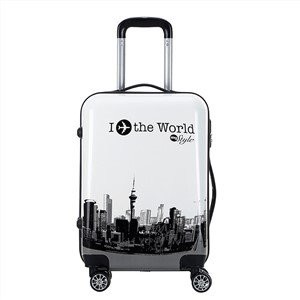
The surface pattern of this Cardan printing boarding suitcase is Shanghai metropolis graffiti. The
-
Hard Shell Printed Suitcase
This hard shell printed suitcase, this pattern is mainly customized by customers to promote their
-
Small Personalised Suitcase
This small personalised suitcase has a fashionable image of Liu Yifei on the surface plus a
-
Children's Trolley Case
This Small Children's trolley case is mainly in cartoon style, the background color is a brick red,




Why Choose Us?
Competitive price
We have a professional purchasing team and costing team,trying to reduce costs and profits,and provide you with a good price.
24h online service
You can contact us to inquire about pre-sales, sales, and after-sales services, and we will give you a very satisfactory.We are at your service online 24 hours a day.
Quality control
For each process,we have strict inspection standards,and we always insist that quality is life.
One-stop Solution
With rich experience and one-to-one service,we can help you choose products and answer technical questions.
What Is Printing Luggage?
Printing luggage involves adding a custom design or pattern onto the surface of a suitcase or any similar baggage. This process is done using specialized printers that can print onto a variety of different materials. The end result is a unique and personalized piece of luggage that stands out from the rest.
Printing luggage has become increasingly popular in recent years, as more people look for ways to express their individuality and make their belongings more easily identifiable. It's also a great way to showcase your personality and add a personal touch to your travel gear. So, if you have a favorite design or logo that you'd like to see on your luggage, printing is a great option.
Easy identification: Printed luggage is easily identifiable and distinguishable from other luggage. This makes it easier to spot your luggage on a conveyor belt or at an airport terminal since it stands out from other bags.
Brand building: By printing your logo or brand name on your luggage, you can promote your brand and business wherever you travel. This is an excellent way to get your brand seen by a wider audience and potentially attract new customers.
Customization: Printed luggage gives you the freedom to choose from a wide range of colors, designs, and patterns that can match your style or interest. This helps to make your luggage unique and personalized, making it easy to find and distinguish it from other bags.
Professional appearance
Printed luggage adds a professional touch to your luggage. It is commonly used by businesses and professionals to promote their brand, show team spirit, or showcase their personality.
Personalization
Printed luggage allows you to personalize your bag with your name or initials, making it easier to spot your luggage and prevent it from being lost or stolen.
Durability
Printing on your luggage can actually help to reinforce the fabric and make it more durable. This is because the ink used in the printing process bonds with the fibers of the fabric, making it stronger and resistant to wear and tear.
Types of Printing Luggage
Screen printing: This method of printing involves transferring ink onto the luggage using a stencil and a mesh screen. It is ideal for printing solid colors and bold designs on luggage.
Digital printing: This method involves printing high-resolution images onto the luggage using a digital printer. It is best suited for printing photographs and intricate designs.
Embroidery: This method involves stitching designs onto luggage using specialized embroidery machines. It is ideal for adding logos and insignias to luggage.
Heat transfer printing: This method involves transferring an image onto the luggage using heat and pressure. It is a popular method for printing designs onto fabrics and is often used on soft-sided luggage.
Sublimation printing: This method involves using heat and pressure to transfer dye onto the luggage. It is ideal for printing on polyester fabrics and produces high-quality, vibrant images.
Pad printing: This method involves using a silicone pad to transfer ink onto the luggage. It is best suited for printing on irregular-shaped luggage and produces intricate designs.
Process of Printing Luggage
Printing luggage can be done in different ways depending on the materials and tools used, as well as the desired design and style. Here is a general process of printing luggage using the commonly used methods:
Choose the luggage material
Depending on the printer and ink type used, different luggage materials may require different preparation or treatment before printing. Common materials include hard-shell plastic, soft-sided fabric, leather, and more.
Prepare the design
Create or select a design that will be printed on the luggage. The design can be created using graphic design software, vector art, or hand-drawn sketches. The design should be in a high-resolution file format.
Prepare the printer
Different printer types may need different settings or adjustments to ensure the best quality output. This can include selecting the ink type, setting the resolution and color mode, and more.
Print the design
Once the printer is set up, the design can be printed directly onto the luggage surface using specialized tools such as a printing platen, inkjet printer, or heat transfer press.
Allow the ink to dry or cure
Depending on the ink type, the printed design may need time to dry or cure before it can be handled or used. This can take several hours or days depending on the ink formula and environmental conditions.
Finish the printed luggage
Once the ink is dried or cured, the luggage can be further finished or customized as needed such as adding zippers, buckles, handles, and more.
Quality control and inspection
After printing and finishing, the luggage should be inspected for any defects or errors. This can include checking the print quality, color accuracy, and durability of the design to ensure it meets the desired standards.
How to Maintain Printing Luggage
Clean the luggage after each use: You can wipe down the exterior of the luggage using a clean, damp cloth. This will prevent dust and dirt from accumulating and damaging the printing on the luggage.
Avoid exposing luggage to direct sunlight: Direct sunlight can cause the colors on your printed luggage to fade. So, make sure to store your luggage in a shaded area away from direct exposure to sunlight.
Store the luggage properly: Always store your luggage in a dry and cool area. Also, make sure to keep it away from items that may scratch or damage the printed surface.
Use a luggage cover: Investing in a luggage cover can help protect the print surface and prevent scratches, tears, and other damage that can occur from handling and transport.
Avoid dragging your luggage: While it may be tempting to drag your luggage across rough surfaces, this can cause damage, particularly on the wheels and bottom of the luggage. Always lift your luggage to move it.
Don't overload the luggage: Overloading your luggage can lead to damage and wear and tear on the printed surface. Be sure to follow the manufacturer's guidelines for the maximum weight and size of the luggage.

There are no standard size or material restrictions for printing luggage tags. However, it is recommended to use durable materials that can withstand travel conditions, such as plastic or leather. The size of the tag can vary depending on the requirements of the airline or travel company. It is important to research size and material requirements before printing luggage tags to ensure they meet the necessary standards.
Opportunity and Challenge for Travel Luggage Printing
Opportunity
A fascinating journey begins with the right luggage case. For travelers, the luggage/trunk is a key accessory in their travels, ensuring the comfort of the trip, and leading them to always being on the move.
Travel bags and luggage are an essential part of any travel. People express their own ideas or cultural experiences through the personalized printing images, artworks, digital graphics, and slogans on their custom luggage, trolley bags, or travel gear.
Challenge
More people are looking for individuality by personalizing goods which reflect their own taste and nature. Add to this, how would it be to easily find your luggage among all other similar suitcases at the airport and how much time you’ll save? Make your travel case stand out by custom printing with very own special photo moments, family pictures, travel destinations, or messages.
What's The Best Printing Technique For Your Custom Bag?
Screen printing
Screen printing (or silkscreen printing) is a popular, traditional printing technique.
The process involves transferring a stencilled design onto a flat surface using a mesh screen, ink and a squeegee. It's ideal when printing on textiles and is the go-to printing technique for bags and clothing.
CMYK printing
This method is a specific type of screen printing based on the combination of the 4 basic inks cyan, magenta, yellow and black. With CMYK printing, a full-colour print that enables exact Pantone colour matches can be achieved by using these four screens.
This is a slightly more expensive method of printing but it can be essential when a design requires specific colours.
Digital printing
Digital printing is the most modern and cost-effective method. A digital-based image (PDF) is sent to the printer and a laser or inkjet is used to apply that image to a surface.
It's simple, fast and works really well on bags, kitchen textiles and clothing.
Rotary printing
One of the most commonly used print methods for fabrics is rotary printing which is a type of screen printing.
Ink is pressed through mesh on a cylindrical screen onto fabric. It works on many different types of materials and is ideal for bags, clothing and kitchen textiles.
Transfer printing
Though it may be considered an old-school method, transfer printing is still a great option.
It uses a heat press to apply a design from paper onto another surface. There are endless possibilities when using this technique as there are no restrictions when it comes small, intricate details.
Litho printing
Litho printing (lithography) is a trusted classic where the artwork is etched onto an aluminium plate using a laser. This plate is covered in wet ink and then put onto the printing press which is made up of lots of rollers that the material goes through.
Glitter printing
Glitter printing is a type of transfer printing that uses the glittering granules visible after print as part of the design. It's a great way to make a statement and can be used on virtually any material but it isn't the most durable printing method.
Foil printing
Foil printing adds a premium look to any product. It uses a pre-glued metallic foil and a heated die to press the design into the surface of the material. It works well for single colour artwork and can be used on a variety of materials but looks great on bags, notebooks and clothing.
Our Factory


FAQ
Q: Do I need to print luggage tags for cruise?
Q: Do I have to print baggage tags?
Q: What is home printed baggage tag?
Q: How to print on luggage labels?
After you design a luggage tag you like, printing it is like printing any other document. Click "File," "Print" and "Print preview" in Word to see how your label looks. Word automatically prints one tag per page unless your specific printer has advanced settings to tile print jobs.
Q: What happens if you don't have luggage tags for a cruise?
Q: Do we need print out of boarding pass?
Q: What is the difference between baggage and tag?
Q: How do digital luggage tags work?
Q: Is my bag tag number on my boarding pass?
Q: Can I make my own luggage tags?
Q: Do luggage tags have your name on them?
Q: Is printing a boarding pass the same as checking in?
Q: What are the 3 types of tagged baggage?
Continuous development to ensure the best efficiencies in the handling of the tags as well on the check-in counter and self-service automates.
Q: Is boarding pass and baggage tag same?
Q: Where is the best place to put a luggage tag?
Q: What is the most popular checked bag size?
Q: What if my checked bag is 2 inches too big?
Q: Is 27 inch luggage considered oversized?
These sizes are the most popular size of luggage to check. They are ideal for trips of 5 to 7 days, or longer, depending on how you pack. They have a large capacity for multiple outfits, shoes, and toiletries.
Q: What is the most popular luggage color?
There's a reason that baggage claim is often a sea of dark-colored luggage swarming conveyor belts. Most people tend to buy black or navy suitcases, says Phil Dengler, co-founder of the travel site The Vacationer.
Q: Why is Samsonite luggage so good?
In particular, it stands out for its durability and ease-of-use features: There's been no struggling to open and close the cases, and packing them has been a breeze thanks to the functional compartments that maximize space.
As one of the most professional printing luggage manufacturers and suppliers in China, we're featured by cheap products and good service. If you're going to buy customized printing luggage at competitive price, welcome to get quotation and discount information from our factory.
Cartoon Printing Large Capacity Suitcase, Cardan Printing Boarding Suitcase, Small Cartoon Printing Luggage